A tack coat holds asphalt layers together and adds to the total cost of a new or reconstruction paving project, yet a weak bond between layers can lead to slippage, delamination, and eventually potholes. That small line item explains a surprising number of the parking lots we inspect. A resident sends a photo of black flakes on a windshield, a maintenance tech sweeps up a handful of loose stone, or a leasing manager notices a sheet of pavement curling up near the dumpster enclosure. All three people use the same word, “peeling,” but each lot has a different problem and needs a different repair. At The Pavement Group, we diagnose apartment parking lots across the country, starting by identifying the type of peeling before we recommend any work.
Overview
- Four different failures can look like peeling: sealcoat flaking, overlay delamination, raveling, and stripping.
- Each failure leaves its own particular debris, so a simple scrape test will sort them.
- Apartment lots peel faster at the entrances, dumpster pads and fire lanes (where the trucks turn and stop).
- The correct repair can be as simple as a local patch to a mill and overlay. The incorrect repair fails within the first season.
- Early diagnosis keeps a surface issue from becoming structural.
The Four Kinds of Peeling We See
Property managers often call us after a contractor recommends a fresh sealer application, only to find the problem returns within six months. That’s because the contractor has treated a structural failure as a cosmetic one. We categorize the causes at the start, and each group originates in a different pavement layer.
Sealcoat flaking is the result of the thin protective film on top of the surface flaking. Delamination is the separation of the two asphalt layers. Raveling is the breaking away of the aggregate stones from the surface. Stripping is the destruction of the bond within the mix by water (usually starting at the bottom). The table below shows how we can differentiate between them on site.
| Type | What we see | Scrape test result | Main cause | Typical repair |
| Sealcoat flaking | Thin black flakes and gray patches | Film lifts off in paper-thin scales, asphalt below looks intact | Over-thinned or over-applied sealer, oil spots, poor surface prep | Clean, prime oil spots, recoat |
| Overlay delamination | Sheets or slabs lifting, often crescent-shaped near braking zones | Layer separates cleanly with a smooth underside | Missing or poorly applied tack coat, dust or moisture between layers | Mill the loose layer, tack, repave |
| Raveling | Loose stones, rough pitted texture, small stones in gutters | Stones pop out when we drag a screwdriver across the surface | Aged binder, low density, dust on aggregate, plow damage | Patch small areas, overlay large areas |
| Stripping | Dark, wet-looking cracks, rutting, or crumbling with a soft base | Crumbles near the bottom of a core sample | Water in the mix, aggregate that resists binder poorly | Remove, fix drainage, replace |
Why Overlays Peel in Apartment Communities
Delamination is the one that really needs attention, since owners don’t tend to suspect it. The National Academies’ research states that the tack coat bonds each lift of the pavement section, and poor bonding is linked to both slippage cracking and fatigue cracking. When that bond fails, the top layer slips and tears under traffic rather than sharing the load with the layers beneath.
Apartment lots will reveal that weakness very quickly. The move-in trucks, the garbage trucks, and the delivery vans all brake and turn hard at the entrance and at the approach to the dumpster, and those horizontal forces will just rip the loosely bonded overlays into crescent cracks. The same stress pattern is evident in our article on the damage that occurs around speed bumps where the braking loads are concentrated over a very short length of asphalt.
The bond fails for the most obvious reasons. Crews will occasionally pave over a surface that is dust-covered or wet from overnight dew. They will occasionally apply too little tack coat or too much (in which case it will break and cure). They will occasionally pave a thin overlay over an old surface that has never been cleaned or milled. We eliminate those problems by sweeping the surface, applying tack at a controlled rate, and ensuring the tack doesn’t get tracked off by trucks before the new mix arrives.
Why the Surface Ravels
Raveling looks like it’s peeling as the surface has lost its skin of stone. Pavement Interactive describes the causes and repairs for raveling as dust on the aggregate, low density (due to poor compaction), aggregate segregation, and mechanical damage from snowplow blades. We see all of them on the apartment properties.
Late season paving is responsible for a significant number of the cases we see. In cold weather, the asphalt cools before the roller can achieve proper density, resulting in a low-density mat that loses stone rapidly. Snowplows in Minneapolis, Chicago, and Pittsburgh scrape the surface of lots that are already at a marginal density, and the blade simply lifts the stone out of the mat. In Phoenix and Las Vegas, UV and heat oxidize the binder until it becomes brittle and the aggregate comes free.
Resident behavior contributes to the damage. The assigned parking spaces accumulate oil and fuel seepage in the same spot for years. Petroleum products soften the binder directly underneath the vehicle, and we frequently find a pocket of raveled asphalt exactly the size of a parking space. To help prevent this kind of deterioration, we recommend routine lot cleaning to remove debris and oil before it penetrates the pavement, along with regular spot checks for new stains or damage. Updating lease language to expressly prohibit vehicle maintenance, oil changes, and chemical dumping on the lot can also help reduce resident-caused issues. These simple preventive measures make it easier to maintain the pavement and minimize future repairs.
Why Stripping Hides Under the Surface
Stripping is the most difficult of the four to identify, as it frequently begins at the bottom of the asphalt. Pavement Interactive states it requires coring to confirm, as it can appear at the surface as rutting, raveling, and cracking. Water in the mix displaces the binder from the aggregate, and the pavement loses strength from within.
That’s why a surface patch over a stripped area fails so rapidly. We take cores, look at the bottom of the sample and trace the water source before we even recommend a repair. The repair is generally to remove the stripped asphalt, fix the drainage problem that caused the stripping in the first place, and then replace the pavement with a properly designed mix. If you skip the drainage fix, you’re guaranteed to have the same failure again.
Sealcoat Flaking and Surface Preparation
Sealcoat peeling is the cheapest thing to fix (once you’ve diagnosed it correctly). A sealer will only stick to clean, sound asphalt. It won’t stick to oil, dust, or loose stone. If a crew applies sealer over unprimed oil spots, the film will peel in patches within months. If a crew dilutes the product with too much water or applies it too thickly, the film will crack and flake.
Our method is to sweep and blow the surface, scrape or prime any oil stains, and fill any cracks prior to applying any coating. We also make it clear to owners that sealcoat will not solve delamination or raveling, since the sealer will not bond to a surface that is already disintegrating. You’re just masking the problem for a season, and the eventual repair will be more costly.
How We Choose the Repair
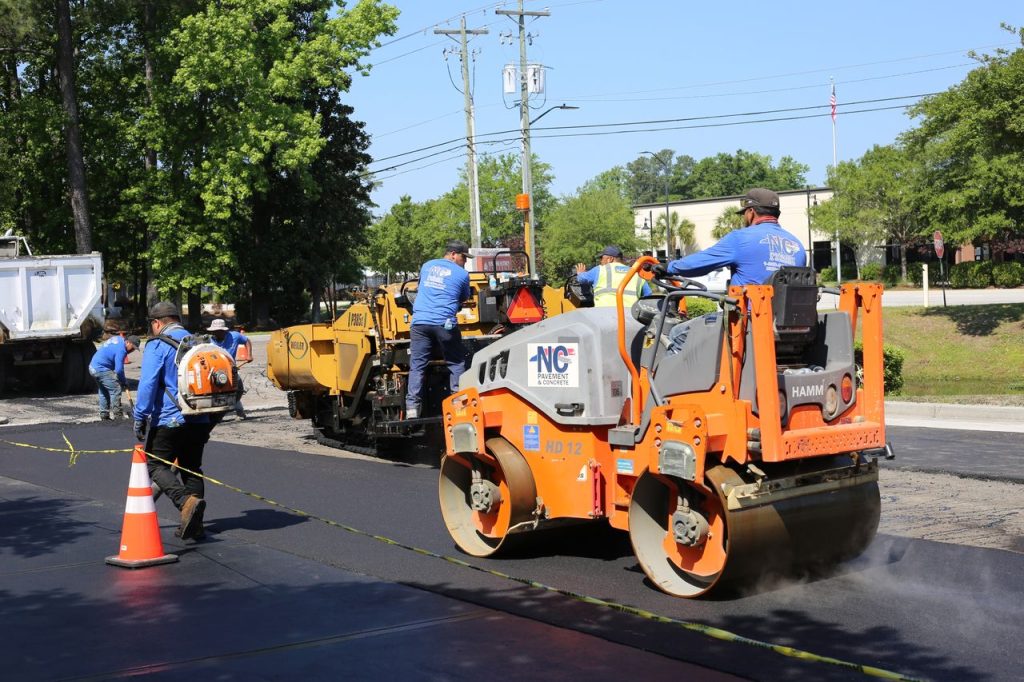
Once you’ve identified the problem, the repair is pretty straightforward. For small areas of raveling, we remove the damaged area and patch it. For extensive raveling, we remove the damaged surface and overlay. We mill the loose layer completely, clean the exposed surface, apply tack at a controlled rate, and place new asphalt in compacted lifts. Our crew replace the failed asphalt for striping once we’ve addressed the water source.
We also look at the surroundings, since peeling often comes with other issues. Poles, drains, and utility covers create stress points and water traps, so we also look at light-pole asphalt damage, which often occurs near peeling. A repair that doesn’t account for those details is likely to fail at the edges.
Take the Next Step
Peeling asphalt doesn’t tend to stay small. Loose stone will damage windshields, the flaking sealer will track into the apartments, and delaminated sheets will be a trip hazard and a source of complaints. The Pavement Group serves apartment communities across the country from our home in Wexford, PA, and we can inspect your lot, determine precisely what type of peeling you have, and provide a repair plan that addresses the root cause.
For repairs, we coordinate closely with property management to create a phased repair schedule that keeps as many parking areas and entrances open as possible. We provide advance notice to residents, including repair dates and any temporary parking changes, through postings at the leasing office and updates in the resident portal. Our crews work efficiently and aim to minimize noise and disruption, all while maintaining clear emergency access at all times. This process helps keep residents informed, reduces inconvenience, and ensures a smooth project from start to finish.
Get in touch for an on-site evaluation prior to the next season turning a surface issue into a structural one.
Stop Asphalt Peeling Before It Leads to Bigger Pavement Problems
Peeling asphalt can quickly turn into loose aggregate, potholes, and uneven parking surfaces if left unaddressed. At The Pavement Group, we help apartment communities identify the underlying causes of pavement deterioration and recommend practical repair solutions, from targeted asphalt repairs to milling and paving. Let us help you restore your parking lot and protect your pavement investment.
Contact UsFrequently Asked Questions
Does loose asphalt debris create a safety or liability risk for our community?
Yes, and the risk begins well before most owners would imagine. Loose rock can chip windshields, roll right under people’s feet, and cause motorcyclists and cyclists to lose grip. Lifted asphalt can create trip hazards on footpaths. Any of those things can lead to a resident complaint, a claim, or a repair request. We recommend sweeping up debris as soon as possible, taking dated photos to document the condition, and then scheduling the repair rather than waiting for an incident to occur. A documented plan is the best way to show you responded to the problem reasonably.
How can we measure whether the peeling is getting worse between inspections?
Use a repeatable photo log and a simple severity check. Pavement condition rating systems (e.g., the airport weathering guidelines from the Indiana DOT) classify surface wear as low severity when the coarse stone edges have less than about 1mm of exposure and as high severity when the stone is clearly exposed and pitted. Take photos of the same stalls, drive lanes, and entrances every quarter with a tape measure or a coin in the frame for scale. If the same area shows more stone missing, a larger footprint, or new cracking at the edge, the damage is progressing, and you should have a professional assess it.
Can resident car washing, pressure washing, or chemical cleaners cause asphalt to peel?
They can certainly help, particularly on lots that already have some aging or low-density asphalt. Petroleum-based solvents and many degreasers dissolve the asphalt binder on contact, so a resident washing an engine bay or dumping cleaner in a stall can end up with a soft, pitted area. High-pressure washing will also blast away the fine aggregate and sealer film from a weathered surface. We recommend lease language that prohibits engine washing and chemical dumping on the lot, and we also advise maintenance staff to use lower pressure and a wide fan tip when cleaning the pavement.
How long should we wait to sealcoat or stripe after we repair a peeling area?
New asphalt has to cure before it will take a coating. As a general rule, we recommend waiting several months (often at least 6 months and, in some cases, as long as a year) for the residual oils to leave the surface and the pavement to fully harden, depending on the mix, the season, and the weather. If you seal too early, you’re trapping the oils and the coating will soften, track, and peel again. Line striping can often follow the sealcoat on most projects, but we always check the timing against the particular patch, mix, and temperatures before we commit the crew.
Do we need to close the entire lot while we repair peeling asphalt?
Normally we don’t do it that way. We work in phases so residents can continue to access their stalls and the building entrances while we work on the rest of the site. Residents receive a notice detailing the repair dates, the stalls affected, and the temporary parking plan, and we advise posting it at the leasing office and in the resident portal at least a week in advance. We also keep emergency access (fire lanes and main entrances) available, and we schedule major work for times when the site is likely to be least busy (off-peak hours, weekdays, etc.) to minimize disruption.
About the Author
The Pavement Group specializes in asphalt engineering, pavement maintenance solutions, and data-driven asset management for commercial, retail, and multi-family residential properties. Utilizing advanced structural pavement evaluations and capital planning transparency, The Pavement Group works directly with property managers to extend pavement lifecycles, eliminate liability risks, and optimize long-term infrastructure investments.